(English Below)
เด็กและเยาวชนควรมีสิทธิเติบโต เรียนรู้ และแสดงออกถึงตัวตนของตนเองได้อย่างปลอดภัย แต่สำหรับเด็กและเยาวชนที่มีความหลากหลายทางเพศ ในประเทศไทย ยังคงมีอุปสรรค ในการเป็นตัวเอง ทั้งในครอบครัว สถานศึกษา ระบบกฎหมาย และพื้นที่สาธารณะ
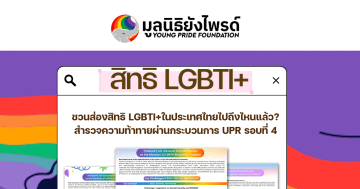
จาก UPR รอบที่ 3 ประเทศไทยได้รับข้อเสนอแนะที่เกี่ยวข้องกับสิทธิ LGBTI+ โดยเฉพาะ 12 ข้อ และยอมรับ 7 ข้อ ครอบคลุมทั้งการต่อต้านการเลือกปฏิบัติและความรุนแรง การศึกษา สุขภาพ และการสร้างความคุ้มครองให้กับกลุ่มที่ถูกทำให้เป็นชายขอบ
อย่างไรก็ตาม แม้ประเทศไทยจะมีความก้าวหน้าด้านสิทธิของผู้มีความหลากหลายทางเพศในหลายด้าน แต่จากการเก็บรวบรวมข้อมูล และการสัมภาษณ์ ชี้ให้เห็นว่าเด็กและเยาวชนที่มีความหลากหลายทางเพศ ยังคงต้องเผชิญกับโครงสร้างทางกฎหมาย และระบบการศึกษา ที่ไม่สอดคล้องกับความหลากหลายทางเพศ โดยเฉพาะเมื่ออัตลักษณ์ทางเพศซ้อนทับกับอายุ ศาสนา ชาติพันธุ์ ความพิการ หรือสถานะทางสังคมอื่น ๆ
ประเด็นท้าทายและวิกฤตสิทธิมนุษยชนที่ที่ถูกนำเสนอในรายงาน
- ช่องว่างทางกฎหมายรับรองอัตลักษณ์ทางเพศ
พระราชบัญญัติความเท่าเทียมระหว่างเพศ พ.ศ. 2558 เป็นกลไกสำคัญในการคุ้มครอ งจากการเลือกปฏิบัติด้วยเหตุแห่งเพศ แต่ยังคงมีข้อจำกัดในการเข้าถึงกลไกการร้องเรียนของเด็กและเยาวชน
ผลกระทบของช่องว่างดังกล่าวยิ่งซับซ้อนขึ้นในพื้นที่ที่อัตลักษณ์ทางเพศ ศาสนา ชาติพันธุ์ หรือสถานะทางสังคมซ้อนทับกัน เช่น ผู้มีคงามหลากหลายทางเพศในจังหวัดชายแดนภาคใต้
- การไร้ซึ่งกฎหมายรับรองเพศ
ประเทศไทยยังไม่มีกฎหมายรับรองอัตลักษณ์ทางเพศ ส่งผลให้เยาวชนข้ามเพศและนอนไบแนรียังไม่สามารถแก้ไขข้อมูลเพศในเอกสารราชการให้สอดคล้องกับอัตลักษณ์ของตนเองได้ ซึ่งนำไปสู่อุปสรรคในชีวิตประจำวัน โดยเฉพาะในด้านการศึกษา การเข้าถึงบริการ และการมีส่วนร่วมในสังคม
- การกลั่นแกล้งและผลกระทบต่อสุขภาพจิตของเด็กและเยาวชนที่มีความหลากหลายทางเพศ
เด็กและเยาวชนที่มีความหลากหลายทางเพศในไทย ยังคงเผชิญการกลั่นแกล้ง การเลือกปฏิบัติ และความรุนแรงในสถานศึกษา ซึ่งส่งผลโดยตรงต่อสุขภาพจิตและความรู้สึกปลอดภัยในการเรียนรู้ นอกจากนี้ ยังพบประสบการณ์การตีตรา การคุกคามทางวาจาและจิตใจ ตลอดจนความรุนแรงทางร่างกายที่เกี่ยวข้องกับอัตลักษณ์ทางเพศ ซึ่งสะท้อนให้เห็นว่าสุขภาพจิตของเยาวชนที่มีความหลากหลายทางเพศ ไม่สามารถแยกออกจากสภาพแวดล้อมที่พวกเขาต้องใช้ชีวิตอยู่ได้
- ระบบการศึกษาที่ยังคงอยู่ภายใต้กรอบเพศแบบชายหญิง
เด็กและเยาวชนที่มีความหลากหลายทางเพศ ยังคงเผชิญกับกฎระเบียบและแนวปฏิบัติ ที่ตั้งอยู่บนกรอบเพศแบบชายและหญิง ตั้งแต่ทรงผม เครื่องแบบ การแต่งกาย ไปจนถึงการจัดหอพักและพิธีสำเร็จการศึกษา
ในระดับโรงเรียน มีกรณีนักเรียนถูกลงโทษด้วยการตัดผม รวมถึงการคุกคามและความรุนแรงจากบุคลากรทางการศึกษา ขณะที่ในระดับมหาวิทยาลัย นักศึกษาข้ามเพศยังคงเผชิญข้อจำกัดในการแต่งกายตามอัตลักษณ์ทางเพศในพิธีรับปริญญา
- การเลือกปฏิบัติแบบทับซ้อน
ปัญหาของเด็กและเยาวชนที่มีความหลากหลายทางเพศ ยิ่งทวีคูณเมื่ออัตลักษณ์ทางเพศสามารถซ้อนทับกับศาสนา ชาติพันธุ์ ความพิการ พื้นที่อาศัย และสถานะทางสังคมอื่น ๆ
ทั้งหมดนี้จึงนำไปสู่ข้อเสนอ ดังนี้
- ตรากฎหมายรับรองอัตลักษณ์ทางเพศ บนพื้นฐานของหลักการกําหนดตนเอง (self-determination) ที่ครอบคลุมถึงเยาวชน และกลุ่มเปราะบางทับซ้อน
- แก้ไขประราชบัญญัติความเท่าเทียมระหว่างเพศ พ.ศ. 2558 ให้ครอบคลุมการรับรองอัตลักษณ์ทางเพศ และยกเลิกข้อยกเว้นตามมาตรา 17 วรรคสอง
- ตรากฎหมายต่อต้านการเลือกปฏิบัติ และกำหนดมาตรการคุ้มครองจากการเลือกปฏิบัติบนฐานของเพศทั้งปวง ให้ครอบคลุมทุกพื้นที่ รวมถึงความรุนแรงและการเลือกปฏิบัติในพื้นที่ออนไลน์
- ยกระดับการบังคับใช้พระราชบัญญัติความเท่าเทียมระหว่างเพศ ผ่านการฝึกอบรมบุคลากรในทุกภาคส่วน โดยเฉพาะสถานศึกษา และยกเลิกกฎระเบียบที่บังคับใช้บนกรอบเพศแบบชายและหญิง เช่น เครื่องแบบ การจัดหอพัก และการใช้พื้นที่ตามเพศ
- ดำเนินมาตรการที่จำเป็นทั้งด้านกฎหมาย การบริการ และการฝึกอบรม เพื่อรับรองสิทธิในการมีสุขภาพที่ดีของเด็กและเยาวชนที่มีความหลากหลายทางเพศ โดยปราศจากการเลือกปฏิบัติบนฐานแห่งเพศ
————————————————–
Children and young people should have the right to grow, learn, and express who they are safely. Yet for LGBTI+ children and youth in Thailand, barriers to being themselves still exist within families, educational institutions, the legal system, and public spaces.
During Thailand’s 3rd UPR cycle, the country received 12 recommendations specifically related to LGBTI+ rights, of which 7 were accepted. These recommendations covered discrimination and violence, education, health, and stronger protections for marginalised groups.
Despite important progress on LGBTI+ rights in Thailand, data collection and interviews show that LGBTI+ children and youth continue to face legal and educational structures that do not adequately reflect gender and sexual diversity. These challenges become even more complex when gender identity intersects with age, religion, ethnicity, disability, or other social status.
Key Human Rights Challenges Highlighted in the Report
- Gaps in legal protection and recognition of gender identity
Thailand’s Gender Equality Act B.E. 2558 (2015) is an important mechanism for protecting people from gender-based discrimination. However, children and young people still face limitations in accessing its complaint mechanisms.
The impact of these gaps becomes even more complex when gender identity intersects with religion, ethnicity, or social status, including for LGBTI+ young people living in Thailand’s southern border provinces.
- Absence of a legal gender recognition law
Thailand still has no legal gender recognition law. As a result, transgender and non-binary young people are unable to change the gender marker on official documents to reflect their gender identity.
This creates barriers in everyday life, particularly in education, access to services, and participation in society.
- Bullying and its impact on the mental health of LGBTI+ children and youth
LGBTI+ children and youth in Thailand continue to experience bullying, discrimination, and violence in educational settings, directly affecting their mental health and sense of safety in learning environments.
Experiences of stigma, verbal and psychological harassment, and physical violence related to gender identity have also been documented. These experiences demonstrate that the mental health and well-being of LGBTI+ young people cannot be separated from the environments in which they live, learn, and grow.
- An education system still shaped by a binary understanding of gender
LGBTI+ children and youth continue to face rules and practices based on a binary understanding of male and female gender, ranging from hairstyles, uniforms, and dress codes to dormitory arrangements and graduation ceremonies.
At school level, cases have included students being punished through forced haircuts, as well as harassment and violence by education personnel. At university level, transgender students continue to face restrictions on dressing in accordance with their gender identity during graduation ceremonies.
- Intersectional discrimination
The challenges faced by LGBTI+ children and youth can be intensified when gender identity intersects with religion, ethnicity, disability, place of residence, and other forms of social status.
These challenges have led to the following recommendations:
- Enact legal gender recognition legislation based on the principle of self-determination, with provisions that are inclusive of youth and those experiencing intersecting forms of vulnerability.
- Amend the Gender Equality Act B.E. 2558 (2015) to explicitly recognise diverse gender identities and remove the exemptions under Section 17, paragraph 2.
- Enact an anti-discrimination law and mandatory training on SOGIESC to ensure equal treatment and eliminate discrimination, including online violence.
- Strengthen implementation of the Gender Equality Act B.E. 2558 (2015) through mandatory SOGIESC training across all sectors, and abolish mandatory gender-binary regulations in educational institutions, including sex-segregated uniforms, dormitory assignments, and gender-segregated facilities.
- Take all legislative, administrative, and training measures necessary to ensure the highest attainable standard of health without discrimination based on sexual orientation or gender identity, including clinically appropriate, non-pathologizing, and evidence-based care.

Young Pride Club: กลุ่มเยาวชนเพื่อความเท่าเทียมทางเพศ
About The Author